
Steel vs. Stick-Built: The New Advantage in Multifamily Development
Why Steel-Frame Industrialized Construction Is Winning: Cost, Speed, and Certainty for Multifamily Developers
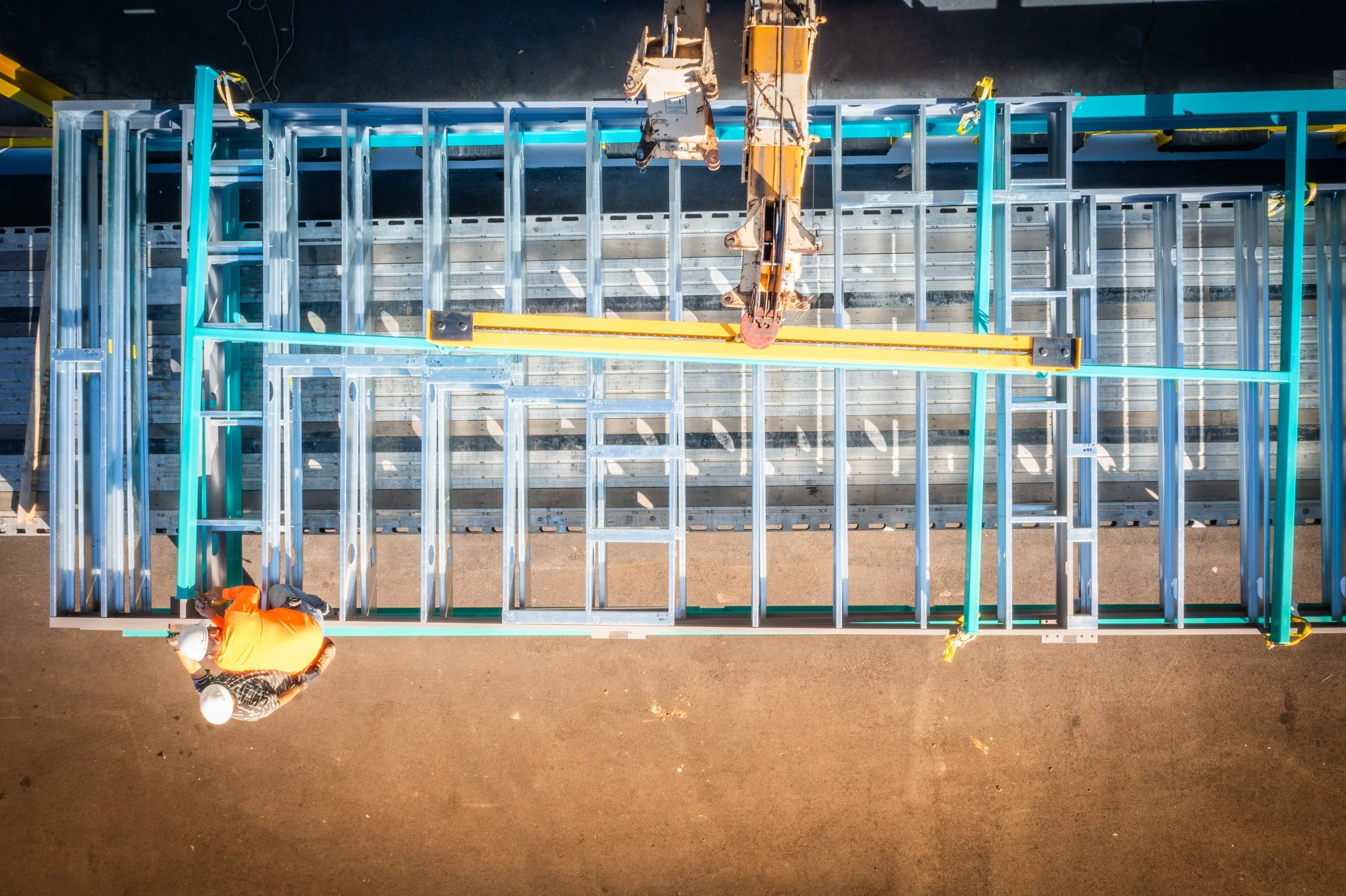
Today’s developers are under pressure: rising costs, permitting delays, labor shortages, and unpredictable construction timelines. Stick-built and stick-modular methods haven’t solved these issues, they’ve just added new ones.
Stick-built construction, whether built entirely on-site or partially assembled as wood modular, is built on unavoidable variability: fluctuating labor availability, material inconsistencies, weather exposure, rework, and unpredictable sequencing across trades. These uncertainties show up as delays, cost overruns, stalled inspections, and ultimately, lower project-level IRRs.
Model/Z delivers a different approach: a fully standardized, steel-frame, AI-enabled industrialized housing system engineered for speed, cost certainty, and scalability.
This is the system for developers who want predictable projects; predictability across timelines, quality, permitting, and pro formas.
The Developer Advantage of Steel: Cost, Speed, and Simplicity at Scale
Structural steel eliminates the material variability that makes wood unpredictable, enabling developers to finally access true manufactured repeatability.
Cost-Certainity From Day One
Model/Z delivers units at ~$253K per door in “all-in” costs with a factory-controlled pricing model that doesn’t fluctuate from project to project. Because we never have to retool our assembly line, developers avoid customization premiums and unpredictable line-item costs.
Faster Project Delivery
With no weather delays, no skilled-labor bottlenecks, and a 240-step quality system ensuring consistent installation, projects move from concept to occupancy far faster. Ultimately, developers reach stabilization in just 12 months compared to the typical 24 month stick-built timeline thus strengthening overall IRR.
Superior Performance for Multifamily
Steel does not warp, swell, shrink, or creep over time like wood does. It allows higher load-bearing capacity, slimmer profiles, and more stories, improving density and floorplan efficiency.
100-Year Lifespan
Model/Z’s steel-frame units are engineered for a century of performance with minimal maintenance.
Fire, Mold, and Termite Resistance
The structural frame eliminates the major risk exposures that drive insurance and long-term failure points in wood.
Why Stick-Built Modular Still Falls Short
Stick-built modular is often positioned as an affordable alternative to steel volumetric systems. But its limitations come from the same core issues: wood, variability, and customization.
Here’s where stick-built modular is falling short for developers::
1. Retooling or Re-Engineering for Every New Project
Most stick-modular vendors build semi-custom products requiring new engineering, jigs, and workflows with each project.
2. “Custom Modular” Results in Delays
Tolerance drift, sequencing inconsistencies, and bespoke detailing create slowdowns and rework during both factory production and installation.
Model/Z’s commitment to standardization unlocks the benefits of incremental improvements, saving customers time and money while developing a highly tested, superior product.
3. Height and Density Limitations
Wood modular systems typically max out at 3-4 stories. Steel supports up to 10 stories and provides higher structural performance.
4. Lower Sticker Cost Does Not Equal Lower Total Cost
Upfront savings disappear through:
field rework
longer installs
higher insurance
more inspections
higher long-term maintenance
shorter lifespan
While stick-built modular is an improvement over site-built, Model/Z’s system was designed specifically to avoid these traps and develop units at ~$253K per door with a 100-year durability profile.
The Model/Z System: Steel + Standardization + AI
Model/Z’s competitive edge is not steel alone. It's the integration of three components into one system:
1. Structural Steel Volumetric Units
Precision-built, consistent, seismically sound, and engineered for 100-year performance.
2. Volumetric Manufacturing & 240 Quality Checkpoints
Aerospace and automotive methodologies drive reliability and eliminate skilled labor bottlenecks.
3. Z-Suite: AI-Enabled Planning and Permitting
Our proprietary AI-enabled Z-Suite software allows developers to identify viable sites, generate building layouts, and understand feasibility in minutes.
Together, these components have allowed Model/Z to introduce the industrialization of multifamily housing.
Ready to see how it can unlock speed, savings, and certainty for your next project?
